A Transportation Reform Platform Would Crush in the Governor's Race Right Now

I keep hearing the same pitch this summer, at the Three Needs Patio and in comment sections, almost word for word: "Vermont has been dying on the vine under Scott for too long. Janoo is a serious economist who has a bold plan to fix it."
As of Tuesday night, that pitch is on the November ballot: Janoo won the primary by about three points, and she'll face Scott, who is running for a sixth term.
I want this side to win — that's why I'm writing this. She is a serious economist. The plan is bold: seven planks, each one bigger than anything Scott has proposed in a decade. And the frustration underneath the pitch is mine too. Which is exactly why the plan deserves a hard look before November instead of after — starting with what "dying on the vine" actually means.
What's actually killing us
"Dying on the vine" means the demographic crisis — the same one state economists have been warning about for a decade. Vermont is running out of working-age people.
Vermont is now the fastest-shrinking state in the country — down 0.3% in the latest Census estimates, and the only state losing people both ways at once: more deaths than births, and more people moving out than in. We're the second-oldest state by median age, at 44.4 just behind Maine. And the number that should keep Montpelier up at night: Vermont ranks dead last among states for 25-to-44-year-olds as a share of its population. Put those together and you get the real disease: every year there are fewer people working here and more people retired here. The workers pay for the retirees' services — that's how state budgets work — so each worker who leaves makes Vermont a little more expensive for every worker who stays, which pushes the next one out the door. That's the vine, and that's the dying.
Almost every fight in Montpelier is downstream of this one problem. School consolidation? Not enough kids. The health system's death spiral? Too few premium-payers, too many patients. Property taxes? A shrinking base carrying a growing load. Fix the demographics and most of these fights get easier. Fail, and no policy fixes anything for long.
So here's a fair test for any "bold plan to fix Vermont": does it attract young working people, or doesn't it? And there are only three levers that attract young working people anywhere: good jobs, a cost of living they can afford, and a school they'd trust with their kids.
Running the plan through the test
Hold Janoo's seven planks up to that test, one at a time, judged on the demographic problem.
- Local businesses and a public bank. Jobs-adjacent, but slow and indirect. Doesn't directly attract young people to Vermont.
- Housing — "Homes for Vermonters, Not Investors." This is the plank aimed most directly at the problem. It gets its own section below.
- Community schools. Closer to the target than it looks. Secondary education is one of the top stats young couples factor into their decision on where to start their careers. Scott's education spending has leaned the other way, toward the state colleges, UVM, and trades training, sold as workforce development. There's no guarantee any of it persuades Vermonters to stay; at worst it's a training program for other states' workers. Secondary is the better bet of the two. Whether or not Janoo's "community schools" idea pans out, secondary is one of our strongest assets, and it matters to have leadership that understands that.
- Ban AI data centers. Whatever its merits, it has nothing to do with why a young welder can't afford to move here.
- Free universal primary care. Real cost-of-living content on its face. But look at it politically and you see what it's for: it's the plank designed to reassure older Vermonters, to balance the housing plank that threatens them. Which means the platform's single largest expenditure — an enormous undertaking, politically and fiscally — flows disproportionately to the exact people we are not trying to attract. Hold that thought; there's a second problem with this plank I'll get to later.
- Citizens' assemblies and democracy reform. Process, not groceries.
- Local food. Pleasant. Marginal.
Two planks out of seven aim at the disease. The rest treat symptoms, or treat nothing.
That's a harsh grade, so to be clear about what I'm not saying: these aren't bad ideas. Several are good ones. But if the pitch is "a bold plan to fix Vermont," and Vermont's problem is demographic, then the plan should mostly aim at the demographic problem — and this one mostly doesn't.
Now for the plank that aims at it hardest, and the trap waiting for it.
The housing trap
An affordable-housing plan only works if housing gets cheaper. Walk that forward one step: cheaper housing means somebody's asset falling in value. Whose? Vermont's older homeowner majority — the people who actually show up and vote here. The plank's success condition and its electoral poison are the same event.
This isn't a criticism of Janoo. It's structural. It is nearly impossible to run against that voter base and win. Nearly — the exceptions are a huge scandal on the other side, or a new-voter registration drive big enough to change who the electorate is. Neither one is a plan you can put in a platform.
And look at how careful her version is: tax second homes, corporate investors, and short-term rentals — pointedly notowner-occupied primary residences. That is about the most electable affordable-housing plank anyone has written. It still hands Scott the ad for free: the economist wants to tax your property. If the most careful version of the idea still loses the ad war, the problem isn't the drafting.
So a candidate who leads with housing has two real options. Option one: balance the ticket — pair the plank that threatens older voters with planks built to reassure them. That's what the primary-care plank is doing, and it's a defensible read of the board. The cost is that your platform's biggest spending now serves the people you weren't trying to attract. Option two, and I think the better one: don't lead with housing at all. Spend term one building credibility on an agenda everyone can get behind, and arrive at housing in term two with a mandate instead of a target on your back. The same second-home tax, proposed by a governor who has spent four years visibly cutting the cost of living, is a different fight.
Which raises the obvious question: what does a term-one, common-ground, cost-of-living agenda look like? Here's where I'd start. Housing is Vermonters' biggest expense. Nobody is talking about the second-biggest.
The second-biggest line item
Transportation is the second-largest expense for American households — $13,318 a year on average, 17 cents of every household dollar, per the Bureau of Labor Statistics. Rural households drive far more miles to get the same living done, and for the lowest-income households the burden reaches 30% of after-tax income. Vermont is the most rural state in the country. When a Vermonter tells you they're broke, a big piece of the story is usually parked in the driveway.
Two things make transportation a better political target than housing.
First, nobody's retirement is stored in their Subaru. Cutting the cost of driving has no constituency against it. It is cost-of-living reduction with no asset-value loser — the thing housing policy structurally cannot be.
Second, it's fast, and the headline is workforce activation. Transportation reform puts people on the road and into the workforce, and some of them are one policy change away from it right now: a safe, working car sitting in the driveway that they can't legally drive. No housing unit gets built for the worker who's already housed and just can't get to the job. Housing supply takes a decade to move prices. Most of what follows is day-one or year-one money back in people's pockets, plus construction jobs you can see from the road.
So here is the platform I keep waiting for someone to run on. Six planks.
The platform
- Cut the auto sales tax. No plank on this list cuts transportation costs more directly: Vermont charges 6% on every vehicle purchase, due in full the day you register. Like most transportation costs it's flat, and therefore regressive — and because it comes due all at once, up front, it is regularly the one bill blocking a Vermonter from getting on the road, which is to say from accessing a job. Those who can't pay cash roll it into the loan and pay interest on a tax for years. How many taxes actively fund an upward wealth transfer? On a $25,000 used car — a modest car, in this market — the bill is $1,500. Exempt the first $15,000 or $20,000 of a vehicle's value and the cut goes to the used-car market, where working people shop, instead of subsidizing new trucks. The whole tax brings in about $145 million a year, split two-to-one between the Transportation Fund and the Education Fund — squarely in the range the second-home tax could cover, and a targeted exemption costs a fraction of that. Exactly what fraction depends on the shape of Vermont's used-car transactions, a distribution the DMV has and doesn't publish, so the honest costing is again clouded by the state's apprehension to publish its data.
- Increase road maintenance spending. Rough roads are a tax; we just pay it to the alignment shop instead of the state. VTrans itself says 38% of state highways are in poor or very poor condition — on track for 60% by 2030 at current funding — and TRIP prices what those roads do to our cars at $253 per driver, every year, in extra repairs, tires, and wear. Fixing them is the rare spending program conservatives already support, the benefit shows up under every single voter's wheels, and the jobs start the same summer.
- Increase public transit spending — and copy Colorado. Ten years ago Colorado's DOT started running its own buses — Bustang — and then linked its ski resorts into the network. That one move gets a lot done at once: the same bus line carries tourists, seasonal workers, and the communities along the route, and it pulls the resorts into a real partnership with the state — they want customers and staff arriving without cars, so they help make the service work. Today it's a proven, popular fixture of Colorado life, with ridership growing every year since the pandemic — over 350,000 trips last year. I don't see any reason we shouldn't give it a shot: short buses connecting the Amtrak stations and Burlington's airport to the ski hills. The starting commitment is smaller than it sounds, too — both of our trains run once a day, so a connector bus fully serves its station with two round trips: a trip to meet the train as it passes in each direction. We've even piloted the resort partnership already without calling it that — Sugarbush helps fund the fare-free Mad Bus. And it aims straight at the demographic problem. Every winter, young mid-Atlantic people take a gap year working at a mountain — I can speak to this one from experience — and a bus from the train platform to the lifts makes Vermont the easiest state in the East to do that year without bringing a car. Seasons like that are how people fall in love with a place. Do this right and Vermont becomes the East's skiing cultural hub, with the bus network to prove it.
- Repeal vehicle inspections, and roll back Act 165's titling changes. Two repeals of laws already on the books.On inspections I'll point you at the full piece rather than flatten it, because the costs come at drivers from several directions at once and the argument only works when you see them stacked. What I'll say here is the part that matters for a platform: inspections take money most Vermonters were already spending on their cars by choice, and make that spending compulsory — on the state's schedule, at the state's threshold, whether or not this was the month you could afford it. There's a real difference between a repair you decide to make and a repair a sticker decides for you, and the difference lands hardest on the people with the least room in the budget. What the state gets in exchange is the part nobody has ever managed to show.Act 165 is the same species of law, passed more recently. Vermont used to run a rolling title exemption: once a car turned fifteen, it no longer needed a title, and every January another model year rolled in. Act 165 froze it. The exemption now stops at model year 2009 and stays there, and a car holds it only as long as it doesn't change hands. (Squaring the DMV's own FAQ with the statute on that last point takes a more careful read than the DMV apparently expects of anyone — and the legislature's website still displays the old, pre-Act-165 text.) The exempt pool can only shrink from here, and the new paperwork lands on the cheapest end of the used market, where clearing a title can cost a real fraction of what the car is worth. That end of the market is where people buy their first car, their work car, the car that gets them to a job.Maybe the trade is worth it. Nobody knows, including the people who voted for it — and I mean that literally. The bill's official fiscal note analyzed exactly one section, about prorated registration refunds, pronounced the whole thing "de minimis," and never mentioned titling at all. What share of untitled sales were actually fraudulent, what that fraud cost Vermonters, what compliance costs a guy buying a $2,000 Corolla: not one of these was anyone's job to count. Restore the rolling exemption and put the burden back where it belongs — on the state, to show the rule earns its cost before it takes effect.Note also what the inspection fight has already proved: a purely deregulatory transportation plank polls across party lines. It's the proof of concept for everything else on this list.
- Free undercarriage wash stations. Rust is well understood to be a huge problem in Vermont — understood, never measured, because the state doesn't count it (I've covered how it fumbles even the car data it already collects). I'll break the numbers down properly in a future piece — my conservative first pass puts the damage in the tens of millions a year. What's not in dispute: salt corrodes cars, and regular undercarriage rinses through the winter measurably slow the damage.As public spending goes, this is the rare kind whose benefit lands concretely in every driver's pocket — cars that last years longer — rather than the usual deal, where a measurable tax on each of us buys a collective good that's nebulous by comparison (the "diffuse benefits" problem, in econ-speak). Longer-lived cars are an economy boost all by themselves. And it only works as a public program — a perfect public good, for two reasons. First, the people who most need to stretch a car's lifespan are the least likely to pay for a rinse, even at proven net-positive value; five dollars today against years of vehicle life years from now is a trade a tight budget loses every time. And those lost years compound: rust shortens every car you'll ever own, which over a Vermonter's driving career adds up to several at least one extra vehicle bought. Second, providing this privately means collecting money, and the collection scheme is both a frictional barrier and nearly as expensive as the service itself.
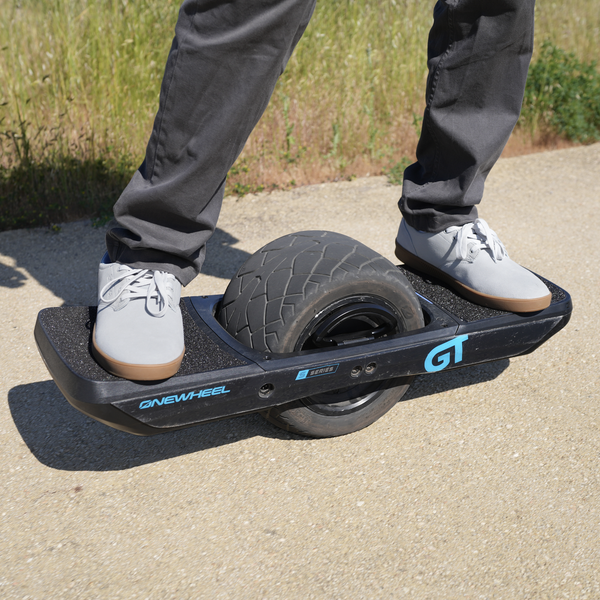
- Explicitly legalize personal electric vehicles. E-bikes, scooters, one-wheels — the cheapest vehicles per mile ever made, and Vermont law mostly shrugs at them. Write them into statute cleanly: where they can ride, how fast, what counts as what — I've laid out a full position on this already. It costs the state almost nothing, and among many other perks should be understood as an important backup plan for when car transportation runs into an issue.
Why this wins
It's bipartisan by construction. Half of this platform is tax cuts and deregulation — Scott-voter catnip. The other half is spending on roads and transit — Democratic catnip. Go back through the six planks and look for the one where an older homeowner loses money. There isn't one. Same cost-of-living goal as the housing plank, none of the electoral poison.
It rewrites what "bold" means. The Janoo pitch treats bold as a synonym for sweeping: public banks, universal care, data-center bans. But there's another kind of bold — doing the unglamorous thing no candidate has bothered to run on because it doesn't come in a partisan flavor. Nobody owns transportation. In a state where everyone drives, that's astonishing, and it means the first mover takes the whole issue uncontested.
The demographic loop closes. Cheaper to buy a car, cheaper to keep it alive, roads that don't eat it, a bus from the airport to the mountain, a legal e-bike for the commute. Vermont gets cheaper for the 28-year-old without getting cheaper for the 68-year-old's house. That's the whole trick — the thing housing policy can't do, done with the second-biggest line item instead of the first.
And Janoo's proposed tax should pay for it. The second problem with the primary-care plank: Janoo funds her promises substantially from taxes on second homes and speculative property — revenue that swings with the real-estate market, flush in booms, gone in busts. The fight this cycle has been over whether to take that money. Wrong fight. Take the money. The question is what it can safely fund, and universal primary care is the worst answer there is: the most rigid commitment a state can make, impossible to take back once people's doctors depend on it. Fund it with boom-and-bust revenue and a downturn delivers both problems at once — the money dries up at the exact moment the program can't be cut.
Transportation is a much better use of volatile money. Every plank above can be phased, paused, or trimmed in a bad year without anyone dying. Match rigid commitments to stable revenue and flexible commitments to volatile revenue — that's the kind of thing serious economists are supposed to insist on.
The receipts on both halves of that argument already exist. Vermont raised the property transfer tax on second homes in 2024, and the take came in about $6 million under its own two-year forecast — a second-home tax already on the books, underperforming its own fiscal note. And Janoo's campaign says her version will raise $1 billion a year, roughly seven times the most aggressive scenario the Tax Department has ever modeled; pressed on it, the campaign called the number "a rough estimate" and conceded no fiscal analysis exists. The money is real. The billion probably is not. One more reason to spend it on things that can flex.
Answering the objections
"You're subsidizing cars. This is climate policy in reverse." Vermont is car-dependent whether we tax driving or not; making necessary driving cheaper doesn't create the driving, it just stops punishing it. Meanwhile, planks 3 and 6 — real transit money and legal PEVs — are more pro-mode-shift than anything any Vermont candidate is currently running on. And cheaper transportation overall is what makes an EV attainable for someone shopping used.
"Where does the money come from?" Two answers. First, magnitudes: the sales-tax cut and inspection abolition are the only real revenue hits, and costed conservatively they are a rounding error next to one year of a universal-primary-care program. Second, the funding source is already on the table: the second-home tax, redirected from the rigid commitment it can't safely fund to the flexible one it can.
"Housing is the real reason young people don't move here, and you know it." I do know it. Housing is the biggest expense and the biggest barrier; nothing here claims otherwise. The claim is about sequence: the biggest fight is unwinnable this decade against this electorate, and the second-biggest is sitting there uncontested. You don't have to win the biggest fight to shrink the total at the bottom of a young family's monthly bill. And a governor who wins on transportation is the one who finally gets to have the housing fight on favorable ground.
"Inspections keep us safe." This one has a whole piece of its own, and it deserves the space — the safety literature, what the state does and doesn't measure, and where the money actually goes. I'm not going to pretend a paragraph settles it. Go read it, then tell me I'm wrong.
Closing
Transportation isn't a substitute for the housing fight. It's how you win the standing to have it. Run on this, govern on it where everyone can see it, and bring the housing plan back in four years with a mandate.
So here's my version of the elevator pitch: Vermont has been dying on the vine, and the plan to fix it is right under our noses. Whoever runs on making it cheap to get around in this state — this November or next — wins.
Every plank above is free for the taking. Janoo's campaign included; there's still time to add a leg. That's why I published them.
Correction, 2026-07-22: An earlier version of this piece graded the community-schools plank as mostly benefiting families already in Vermont. I've refined my position: secondary-school quality is one of the main things young families weigh when choosing where to live, and a reason they stay, which makes it a demographic lever rather than a symptom treatment. The bullet has been rewritten, and the plank count in the section below it corrected from one to two.
Source Notes
- Amanda Janoo campaign platform: janooforvt.com/platform-page (planks as listed, accessed Aug 2026)
- Primary result: AP call, Aug 11 2026; Janoo over Richards ~49%–46% (WCAX, Vermont Public, Aug 12 2026 — swap in certified totals from the Sec. of State when posted). Scott's sixth-term announcement: VTDigger, May 28 2026.
- Population decline: Census Bureau Vintage 2025 state estimates (−0.3%, −1,858, July 2024–July 2025; only state with both natural decrease and net outmigration); Vermont Public, Jan 29 2026
- Median age 44.4, second behind Maine (44.9): Census Vintage 2025 estimates by age. Last-in-nation 25–44 share: Campaign for Vermont Feb 2026 newsletter, citing Census/Vermont Futures Project — advocacy-compiled, underlying data traced before publication
- BLS Consumer Expenditures 2024 (released Dec 2025): transportation $13,318/yr, 17.0% of spending, second-largest category
- BTS "Household Cost of Transportation" data spotlight: rural households drive significantly more miles; lowest-income households spend 30% of after-tax income (38% among vehicle owners). Note: BTS finds the rural-vs-urban difference in cost burden not statistically significant — the draft's claims are worded to stay inside that.
- Census 2020 urban-rural classification: Vermont most rural state, 64.9% (Maine second; pre-2020 definitions had the order reversed)
- Vermont purchase and use tax: 32 V.S.A. § 8903 (confirmed); revenue $144.9M FY24, 2/3 Transportation Fund / 1/3 Education Fund — DMV presentation to Senate Transportation (Mooberry), Mar 18 2025
- TRIP Vermont fact sheet, April 2026: $253/driver/yr, $122M statewide, on deteriorated roads. VTrans: 38% of state highways poor/very poor, projected 60% by 2030 (via Seven Days, Apr 15 2026 — pull VTrans's primary doc before publishing)
- Bustang: CDOT 10-year anniversary release (July 2025, ~351k annual trips, growth streak); Colorado Sun, Apr 1 2026 (353,400 trips FY25, +21%). Resort co-funding precedent: ski areas + Town of Steamboat subsidize Snowstang (Aspen Times, Jan 2020); Sugarbush co-funds fare-free Mad Bus (GMT MRV End-of-Season Report 2022). Full links in Newsletter 3 Research Notes.
- Vehicle inspections: "It's Time to Abolish Vermont Vehicle Inspections," Right of Way, Aug 7 2026 — rightofwayvt.com/its-time-to-abolish-vermont-vehicle-inspections/ (self-cite)
- PEVs: "Personal Electric Vehicles: A Position," Right of Way, Aug 4 2026 — rightofwayvt.com/personal-electric-vehicles-a-position/ (self-cite)
- Act 165 (2024) = S.309, signed June 6 2024. Enacted text (Sec. 28, amending 23 V.S.A. § 2012(10)): exemption for "a vehicle that is more than 15 years old on January 1, 2024 that has been registered in Vermont and has not had a change in ownership since January 1, 2024," retroactive to Jan 1 2024. DMV guidance: dmv.vermont.gov/tags/act-165 (FAQ covers the seller's side; buyer is titled at registration — the readings reconcile, barely). Legislature's online statutes page still shows pre-Act-165 text as of Aug 2026. JFO fiscal note (Mooberry, final May 2024): analyzes only the registration-refund section, "de minimis impact on state revenues," titling never mentioned — ljfo.vermont.gov, GENERAL-374477-v4-FN-S309. Pull DMV Bulletin 24-5 before publishing.
- Second-home tax: Janoo $1B/yr claim + "rough estimate" concession — VTDigger, Aug 3 2026. Tax Dept modeled scenarios topping out ~$138.6M/yr, and Act 181 (2024) transfer-tax actuals ~$28M over two years vs. $34.3M JFO forecast (~7,300 purchases) — Compass Vermont. Base data: ~51,000 seasonal homes, 15% of stock, #2 nationally (VHFA Housing Needs Assessment factsheet, June 2024); Tax Dept has flagged ~70,000 potentially taxable properties (definitions differ — don't mix).